AI is attracting enormous investment, but investors are asking tougher questions about the costs and returns. Anthropic's recent IPO filing offers a rare look at the enormous infrastructure investments needed to support AI companies. Those costs are raising questions about how quickly AI spending will generate returns.
Drive up Highway 101 toward San Francisco, and the billboards tell you where venture capital is going. Every few blocks, another company promotes agentic workflows, autonomous platforms, or foundation models. Billions are flowing into AI development and infrastructure, but the networks needed to support them get far less attention.
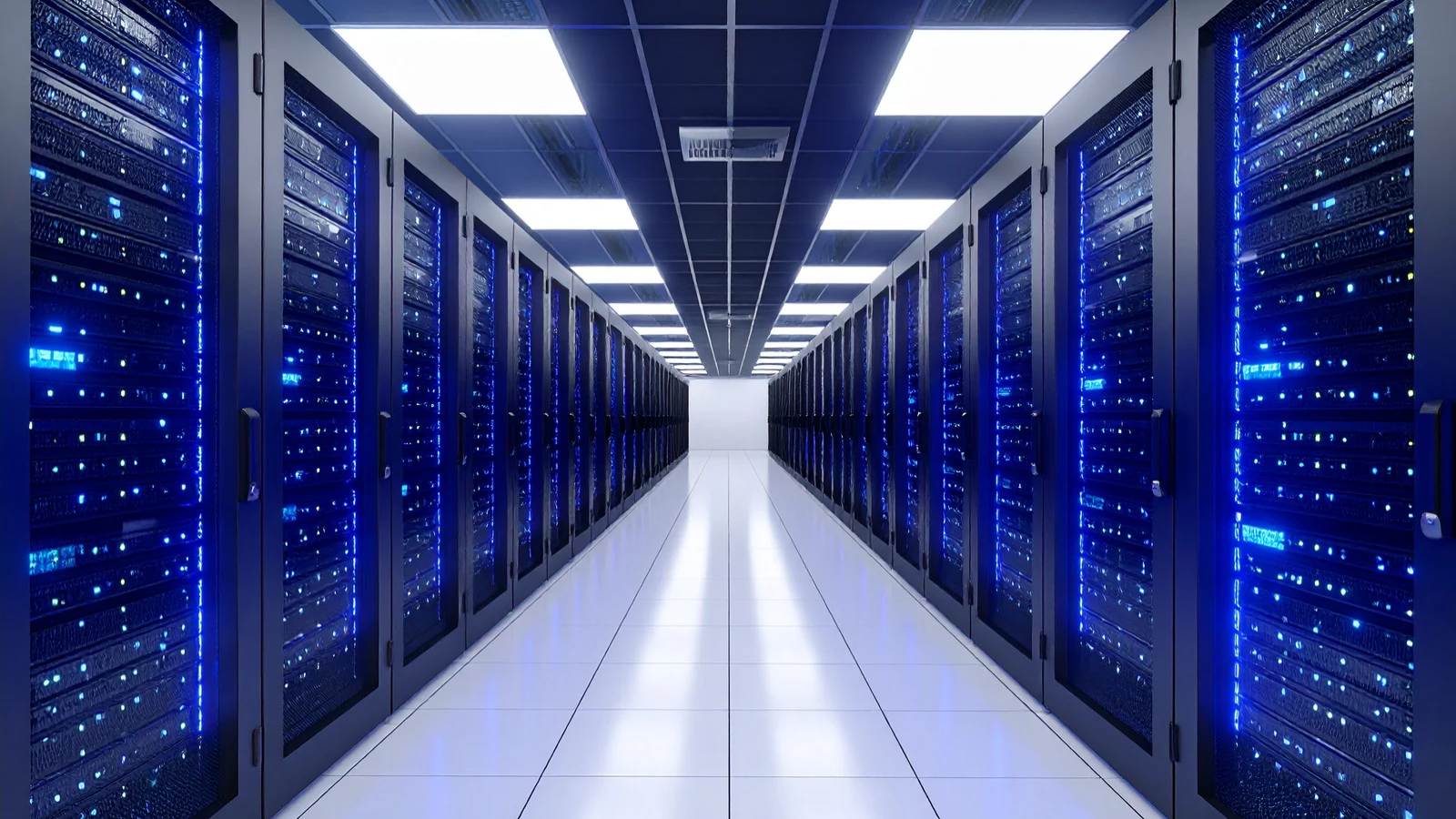
AI may be sold as software, but its limits are physical. Deploying AI at scale depends on data center capacity, high-speed networks, fiber, electricity, and cooling. Better chips and algorithms won't solve power shortages, overloaded networks, or cooling limits. Software can advance quickly, but infrastructure deployment moves at a slower pace due to longer construction cycles.
I've worked in tech PR through several industry shifts, from the rush to light dark fiber and deploy early DWDM in the years surrounding the 1996 Telecommunications Act, through Carrier Ethernet and enterprise virtualization, to hyperscale cloud infrastructure. Each put new demands on networks and the companies building them. AI is no exception, although the scale and speed of demand are different.
Regional interconnects, long-haul networks, and utilities face mounting demands and short timelines. As AI workloads become more distributed, network operators also need greater capacity to move data between data centers and across regions. That puts more attention on data center interconnection, optical transport, and long-haul network investment.
For companies developing technologies that support AI infrastructure, these challenges also create opportunities for earned media. Network upgrades, new optical technologies, and advances in transmission capacity have implications well beyond the companies developing them. Editors need to understand why those advances matter to the operators and enterprises investing in infrastructure.
That's the disconnect AI infrastructure companies should be talking about. Physical systems increasingly constrain AI deployment.
Yet too many deep-tech companies lead with what they've built rather than the problem it solves. For 2027 media planning, companies should show technology and business editors what happens when physical systems can't keep up.
Two mistakes undermine otherwise strong pitches:
The Consequence Is the Story
When networks lack capacity or data centers can't get enough electricity, the consequences become the story. For a financial institution, network congestion can affect application performance and the movement of data between locations. For a data center operator, a campus may sit idle awaiting a substation upgrade.
The same principle applies inside the data center. As speeds move toward 800G and 1.6T, copper interconnects face growing limitations around distance, power consumption, and heat. Those constraints are driving investment in optical interconnects and silicon photonics.
An engineering team might achieve a breakthrough in chip design or materials, but the media story should focus on what that advance enables. Does it reduce power consumption or cooling requirements? Can operators support denser GPU deployments within existing power limits? Those answers make a technical development relevant to an editor.
How Can Companies Bridge the Gap Between News Cycles?
Most deep-tech and energy infrastructure companies don't have major product announcements every quarter. Press-release-driven programs can go silent for months, even as executives hear daily about customers' problems.
A better approach is to capture those observations consistently:
This isn't about inventing news. By recognizing when executive insights can be leveraged for earned media, companies can provide value to their prospective customers beyond product specs and self-promotion.
How Earned Media Closes the Trust Gap
Enterprise buyers and infrastructure operators want evidence that technology works and suppliers understand their operations. Earned media can help build that credibility. When a respected trade journalist turns to an executive for perspective on power efficiency, traffic patterns, or thermal density, that coverage can strengthen credibility with prospective customers and extend visibility beyond company channels as AI-driven search evolves.
Editors don't need another executive declaring that AI is transforming infrastructure. They need sources who can explain where systems are falling short, what operators are experiencing, and which advances are having the most impact on real-world use cases.
The strongest 2027 media strategies connect engineering advances to operational problems in real-world contexts. Make that connection before a pitch reaches an editor, and the technology has a better chance of earning coverage.

AI is transforming how B2B tech buyers search, favoring intent-based questions and credible earned media. Thought leadership now outranks paid content, making PR essential for visibility, authority, and growth.
At Engage PR, we help B2B technology companies embrace AI-driven PR strategies that deliver measurable results.
Download our free Playbook, B2B Tech PR in the AI Era, and discover how to: